


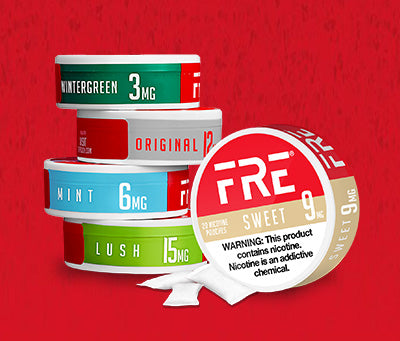


As an adult nicotine consumer, you’ve likely noticed the mandatory warning label occupying a significant portion of your nicotine pouch tins. This label isn't a creative choice but a federal requirement. The U.S. Food and Drug Administration (FDA), through its Center for Tobacco Products (CTP), governs how nicotine pouch manufacturers develop, market, and distribute these products. Understanding that regulatory framework helps explain what appears on every tin and what those requirements actually mean.
Product Basics: What Are Nicotine Pouches?
Nicotine pouches are oral nicotine products designed to be tobacco-leaf free. Unlike traditional smokeless tobacco, they do not contain tobacco plant material.
Most nicotine pouch brands include four primary components: nicotine (either tobacco-derived or synthetic), fillers such as microcrystalline cellulose, pH adjusters to control nicotine release, and flavorings. Because they do not produce smoke or vapor and do not require spitting, they are often used as a discreet alternative by adult nicotine consumers.
The Federal Framework: Tobacco Product Classification
The FDA regulates nicotine pouches under the Tobacco Control Act nicotine framework. Even though they are tobacco-leaf free, they fall under the tobacco product classification because they contain nicotine. In 2022, Congress extended FDA authority to include products containing synthetic nicotine, ensuring all nicotine pouch brands, regardless of nicotine source, are subject to FDA regulation.
This brought the entire category under three main areas of oversight.
Premarket Review: Nicotine pouch manufacturers must submit detailed applications before products can be marketed.
Manufacturing Oversight: Tobacco products are subject to federal standards related to adulteration and misbranding.
Marketing Restrictions: The FDA monitors advertising and branding to prevent youth appeal and restrict unsubstantiated claims.
Anatomy of a Label: Nicotine Warning Label Requirements
Nicotine product labeling laws require standardized warning labels across all nicotine pouch brands. The Federal Labeling Requirements include:
-
Warning Text: “WARNING: This product contains nicotine. Nicotine is an addictive chemical.”
-
Visibility: Must cover at least 30% of the principal display panels
-
Font: Minimum 12-point, bold, sans-serif
-
Marketing Terms: Words like “light,” “mild,” or “low” are restricted without authorization
These nicotine warning label requirements are established under existing federal tobacco regulations and apply consistently across regulated nicotine products.
The FDA has also encouraged the use of child-resistant packaging, and currently authorized nicotine pouch products are reported to use child-resistant designs.
Marketing, Flavors, and Youth Prevention
Since nicotine pouches are only for adult consumers, regulation includes oversight of flavors and advertising. The FDA evaluates flavored products using a public health standard. Nicotine pouch manufacturers must demonstrate that flavors benefit adult nicotine consumers without increasing youth appeal.
Higher-risk flavor profiles, such as candy-inspired varieties, may face greater scrutiny during review. Authorized products may also be subject to post-market requirements, including restrictions on advertising channels and audience targeting.
Access and Distribution: Nicotine Pouch Age Restrictions
Nicotine pouch age restrictions are governed by federal law. The Tobacco 21 law prohibits the sale of nicotine products to anyone under 21. Retailers must verify ID for all customers who appear under age 30.
Online Sales and the PACT Act
Online sales of nicotine pouch brands operate under a combination of federal and state rules. The PACT Act clearly applies to cigarettes, smokeless tobacco, and electronic nicotine delivery systems. Its application to nicotine pouches depends on product classification and interpretation.
Regardless, reputable sellers typically use:
-
Third-party age verification
-
Adult signature upon delivery
-
Tax compliance systems
-
Imports and State-Level Variation
The FDA has increased scrutiny of tobacco product imports and proposed submission tracking requirements for certain nicotine product categories. Import compliance for nicotine pouches depends on current regulatory interpretation and enforcement.
State-level rules add another layer of complexity. Some states apply excise taxes to nicotine products while others regulate flavored products through state-specific frameworks. For example, California maintains an Unflavored Tobacco List as part of its flavored tobacco enforcement system, which affects which products can be sold at retail.
Why Nicotine Pouch Regulation Matters
For adult nicotine consumers, regulation translates directly into what appears on the tin. The FDA framework determines which products can be legally sold, what the label must disclose, and what claims a brand is permitted to make. Understanding what that oversight actually covers helps clarify what the label is (and isn't) telling you.
-
Ingredient Reporting: Manufacturers submit ingredient data, but this is not the same as independent certification
-
Label Accuracy: Laws prohibit misleading labeling, though discrepancies have occasionally been observed in testing
-
Accountability: The FDA can issue warnings, fines, or enforcement actions when violations occur
The regulation sets the baseline. Knowing what it does and doesn't cover puts you in a better position to read that baseline accurately.
Understanding Nicotine Pouch Brands in Context
Nicotine pouch brands now operate within a defined federal framework shaped by the Tobacco Control Act and FDA oversight. As regulation continues to evolve, the market is increasingly structured around authorized products, standardized labeling, and restricted marketing practices.
For adult nicotine consumers, this means the information on each tin (warnings, strength, and packaging) is shaped by nicotine product labeling laws and federal review processes. And yet, the responsibility to interpret that information still sits with the person holding the tin.
FRE is committed to presenting product information clearly and in plain language, so packaging standards and regulatory requirements are easy to interpret. View FRE's selection of products made with nicotine derived from non-tobacco sources, or use the store locator to find products near you.


